

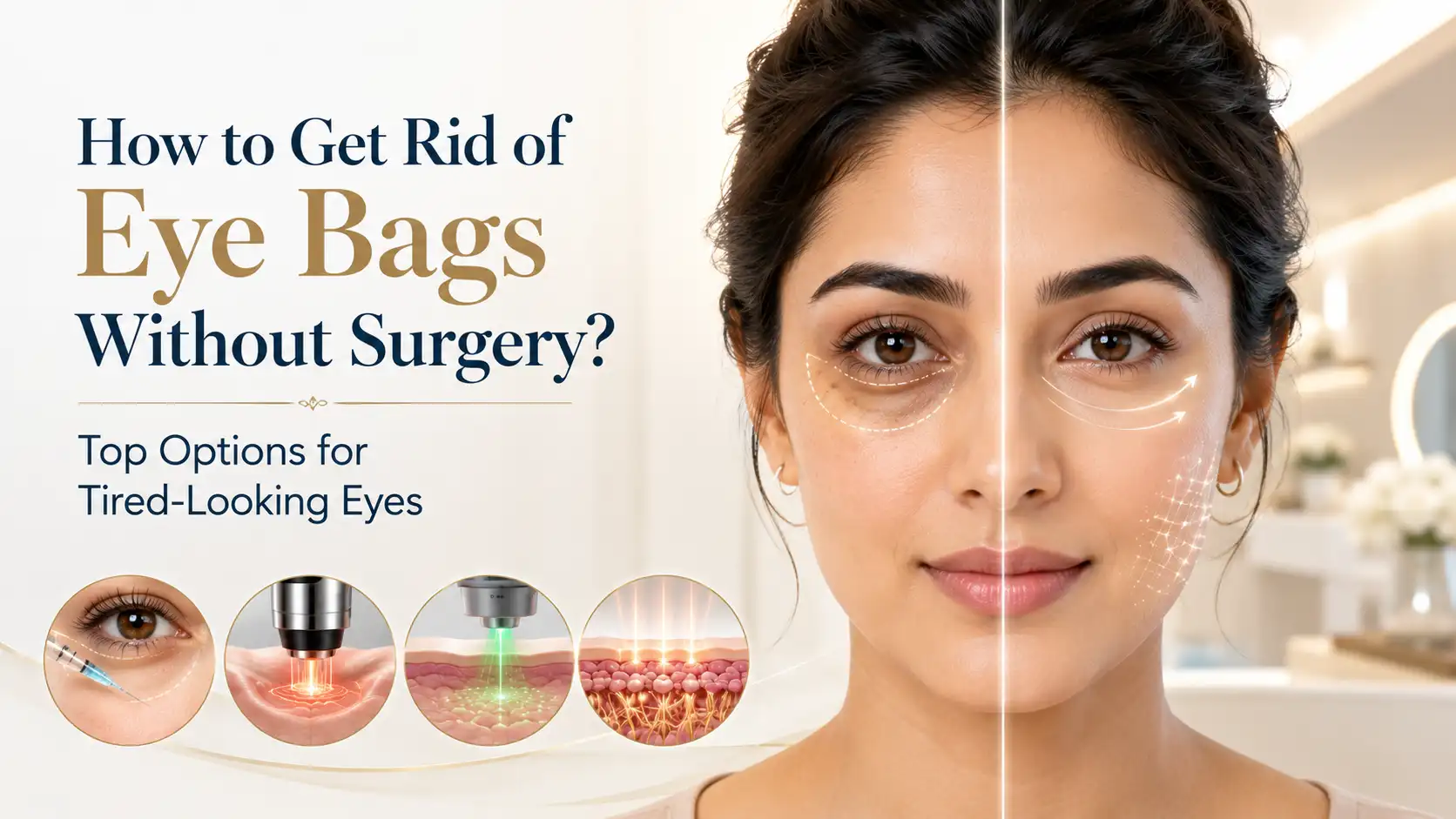
The eyes are often the first feature people notice, but they are also among the earliest areas to show signs of aging and fatigue. Puffy under-eye bags, dark shadows, and loose skin can make a person appear constantly tired, stressed, or older than they actually are—even after a good night’s sleep.
According to the International Society of Aesthetic Plastic Surgery (ISAPS) Global Survey, India is among the leading countries performing aesthetic procedures, with a growing demand for minimally invasive facial rejuvenation. Increasing awareness, improved technologies, and shorter recovery times have encouraged more people to explore Non-Surgical Treatments for Eye Bags before considering surgery.
However, not every under-eye concern is caused by the same problem. Some people develop eye bags due to protruding fat pads, while others experience loose skin, fluid retention, pigmentation, volume loss, or age-related collagen depletion. Because these causes differ, there is no single treatment that works for everyone.
Dr. Devayani Barve, a renowned Plastic, Aesthetic and Reconstructive Surgeon in Mumbai with over 18 years of experience, believes that successful under-eye rejuvenation begins with identifying the exact cause of the problem. By carefully assessing facial anatomy, skin quality, and ageing patterns, she develops personalized treatment plans that aim to restore a refreshed, natural appearance without making the face look overtreated.
Why Do Eye Bags Develop?
Eye bags are a common cosmetic concern affecting adults of all ages. Although ageing is the most frequent cause, several factors can contribute to their development.
With age, the tissues supporting the lower eyelids gradually weaken. Fat that normally cushions the eyeball can shift forward, creating visible bulges beneath the eyes. At the same time, collagen and elastin levels decline, causing the skin to become thinner and less firm.
Other contributing factors include:
- Genetics
- Sleep deprivation
- Allergies
- Chronic eye rubbing
- Fluid retention
- High salt intake
- Smoking
- Sun damage
- Natural ageing
Some individuals inherit prominent under-eye fat pads at a young age, while others develop puffiness gradually over several decades.
Because different causes produce similar symptoms, an accurate diagnosis is essential before selecting treatment.
Can Lifestyle Changes Reduce Eye Bags?
Not every patient requires cosmetic procedures. Mild under-eye puffiness related to temporary fluid retention or lack of sleep may improve with healthy lifestyle modifications.
Simple measures include:
- Getting adequate sleep
- Staying well hydrated
- Reducing excessive salt intake
- Managing seasonal allergies
- Using sun protection
- Avoiding smoking
- Applying cold compresses during temporary swelling
Although these measures can reduce temporary puffiness, they usually cannot eliminate age-related fat protrusion or significant loose skin.
When structural changes develop, aesthetic treatments may provide more noticeable improvement.
Dermal Fillers for Hollow Under-Eyes
Many people mistake hollow tear troughs for eye bags. In reality, volume loss beneath the lower eyelid creates shadows that exaggerate puffiness and make the eyes appear tired.
Dermal fillers containing hyaluronic acid are designed to restore lost volume beneath the eyes, creating a smoother transition between the lower eyelid and the cheek.
Treatment may help improve:
- Tear trough hollowness
- Under-eye shadows
- Mild contour irregularities
- Facial balance
The procedure is performed using fine needles or cannulas and generally requires minimal recovery time.
However, fillers are not suitable for patients whose primary concern is large protruding fat pads or significant skin laxity.
Skin Tightening Treatments for Mild Eye Bags
Some patients have loose, crepey skin rather than excess fat.
Energy-based technologies can stimulate collagen production and gradually improve skin firmness around the eyes.
Common non-surgical skin tightening treatments include:
- Radiofrequency
- Microneedling with radiofrequency
- Fractional laser resurfacing
- Collagen-stimulating technologies
These procedures focus on improving skin quality rather than removing fat.
Results usually develop gradually over several weeks as new collagen forms beneath the skin.
Patients with early ageing changes often benefit from these treatments before more advanced structural ageing develops.
Injectable Treatments for a Refreshed Appearance
In selected patients, injectable treatments may complement under-eye rejuvenation.
Neuromodulators can soften wrinkles around the eyes by temporarily relaxing specific facial muscles, while collagen-stimulating injectables may improve skin quality over time.
These treatments do not directly remove eye bags but may enhance the overall appearance of the upper and lower face when combined with other procedures.
Treatment selection depends on facial anatomy, muscle activity, and aesthetic goals.
When Non-Surgical Treatments May Not Be Enough
Although minimally invasive treatments have advanced considerably, they cannot correct every cause of under-eye ageing.
Patients with:
- Large protruding fat pads
- Significant loose skin
- Severe lower eyelid laxity
- Advanced ageing changes
may achieve more predictable and longer-lasting improvement through lower eyelid surgery (blepharoplasty).
Understanding the limitations of non-surgical treatments helps patients develop realistic expectations and choose the most appropriate option.
Why Personalized Assessment Is Essential
The lower eyelid is one of the most delicate areas of the face, requiring careful evaluation before treatment.
Two patients with similar-looking eye bags may require completely different approaches depending on whether the underlying issue involves:
- Fat protrusion
- Volume loss
- Skin laxity
- Pigmentation
- Facial anatomy
- Ageing pattern
Dr. Devayani Barve performs a detailed facial assessment before recommending any treatment. Instead of following a standard protocol, she develops individualized treatment plans that preserve natural facial expressions while improving under-eye appearance.
Her goal is not simply to reduce puffiness but to restore facial harmony and create refreshed, youthful-looking eyes without obvious signs of cosmetic treatment.
Frequently Asked Questions
1. What causes eye bags even in young adults?
Eye bags may develop due to genetics, inherited fat pads, allergies, lack of sleep, fluid retention, or early ageing changes.
2. Can eye bags disappear without surgery?
Mild puffiness caused by temporary factors may improve with lifestyle changes, while structural eye bags often require aesthetic treatment for noticeable improvement.
3. Which non-surgical treatment works best for eye bags?
The best treatment depends on the cause. Fillers address volume loss, while collagen-stimulating and skin-tightening treatments improve loose skin. Some patients may benefit from a combination approach.
4. Are non-surgical treatments permanent?
Most non-surgical treatments provide temporary improvement and may require maintenance sessions depending on the procedure and individual ageing process.
5. When should someone consider surgery instead of non-surgical treatment?
Patients with significant fat protrusion, excess skin, or advanced lower eyelid ageing may achieve better results with blepharoplasty after evaluation by Dr. Devayani Barve.
The growing popularity of Non-Surgical Treatments for Eye Bags reflects the increasing demand for facial rejuvenation procedures that require minimal downtime while producing natural-looking improvements.
Depending on the underlying cause, treatments may include dermal fillers, collagen-stimulating procedures, radiofrequency-based skin tightening, laser technologies, or carefully selected injectable treatments. However, no single procedure is suitable for every patient.
The most successful outcomes begin with an accurate diagnosis rather than choosing the latest technology. By identifying whether eye bags result from fat protrusion, skin laxity, volume loss, or ageing changes, Dr. Devayani Barve creates personalized treatment plans designed to achieve balanced, refreshed, and natural-looking results.