
A well-defined jawline has become one of the most desirable facial features for both men and women. Yet, despite maintaining a healthy weight and active lifestyle, many people continue to struggle with a persistent double chin. This concern can affect facial balance, make a person appear older, and often remains resistant to diet and exercise alone.
According to the International Society of Aesthetic Plastic Surgery (ISAPS) Global Survey, India continues to rank among the world’s leading countries for aesthetic procedures, with hundreds of thousands of cosmetic surgical and non-surgical treatments performed every year. The increasing popularity of minimally invasive facial rejuvenation reflects a growing preference for treatments that offer noticeable improvements with little or no downtime. Among these, Non-Surgical Treatments for Double Chin have become one of the fastest-growing facial contouring procedures.
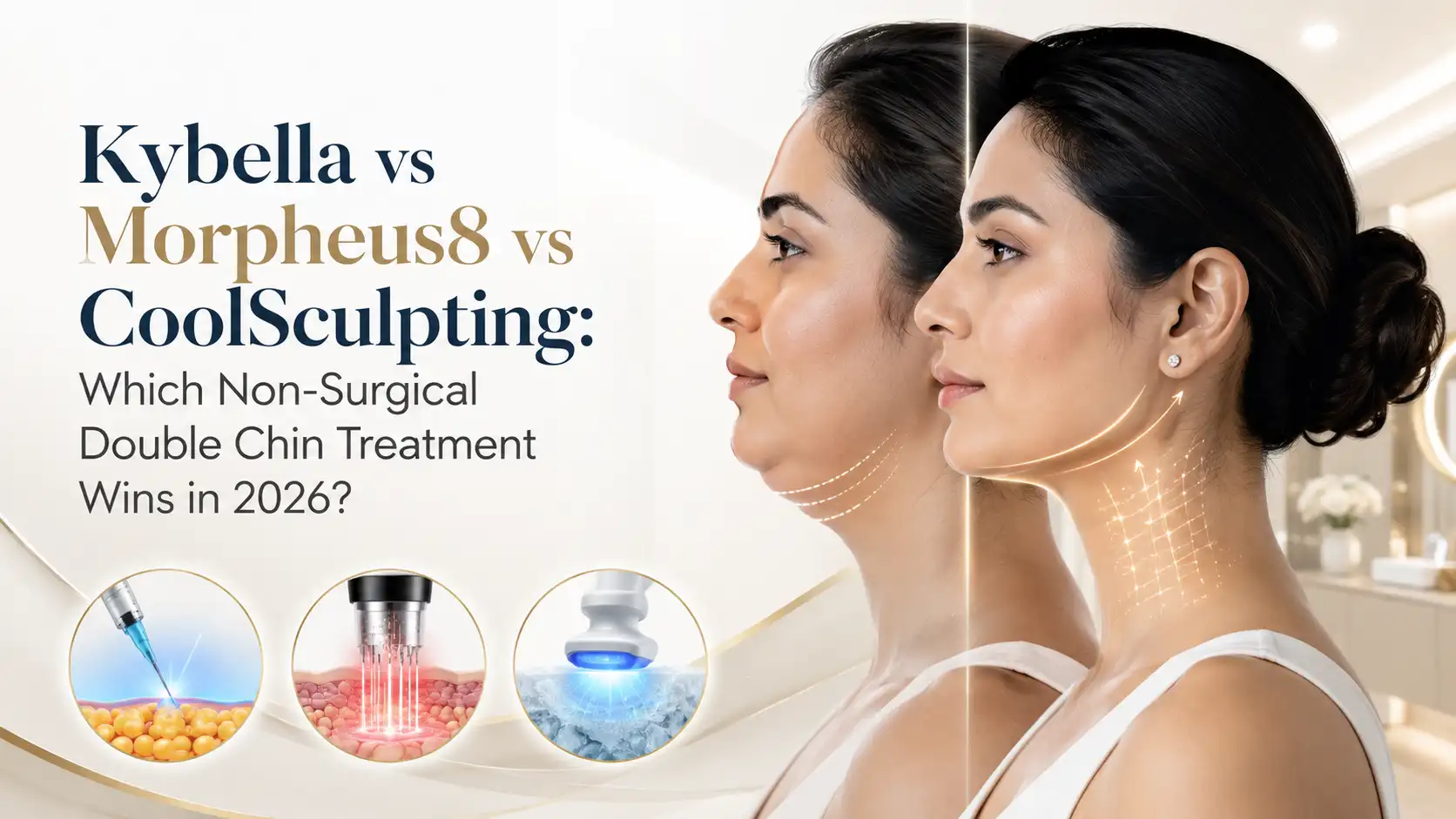
Patients today frequently encounter treatments such as Kybella, Morpheus8, and CoolSculpting, all of which promise to improve jawline definition without traditional surgery. Although these procedures are often discussed together, they are designed to solve different problems. Some primarily reduce excess fat, while others improve skin firmness or stimulate collagen production. Choosing the right treatment requires understanding the underlying cause of the double chin rather than simply selecting the latest technology.
Dr. Devayani Barve, a renowned Plastic, Aesthetic and Reconstructive Surgeon in Mumbai with over 18 years of experience, believes that successful facial contouring begins with a detailed evaluation of facial anatomy, skin quality, fat distribution, and individual expectations. By tailoring treatment to each patient’s unique concerns, she focuses on creating balanced, natural-looking facial definition rather than dramatic or artificial changes.
Why Does a Double Chin Develop Even in Slim Individuals?
One of the biggest misconceptions about a double chin is that it only affects overweight individuals. In reality, many people with a healthy Body Mass Index (BMI) develop fullness beneath the chin due to factors unrelated to body weight.
Genetics play a major role. Some individuals naturally inherit a tendency to store fat beneath the chin even when fat accumulation elsewhere in the body is minimal. Facial bone structure also contributes significantly. A naturally smaller chin or less prominent jawline may create the appearance of a double chin despite having very little excess fat.
Ageing is another important factor. As collagen and elastin levels gradually decline, the skin loses its ability to remain firm and elastic. The tissues beneath the chin begin to sag, creating fullness even without significant fat deposits.
Weight fluctuations can also influence the appearance of the neck. After substantial weight loss, some patients are left with loose skin that continues to resemble a double chin despite successfully reducing body fat.
Poor posture, prolonged screen time, and changes in neck muscle tone may further contribute to reduced jawline definition over time.
Because several different anatomical factors can produce a similar appearance, identifying the underlying cause is the most important step before selecting any treatment.
Kybella: Who Benefits Most from Fat-Dissolving Injections?
Kybella is an injectable treatment designed specifically to reduce localized fat beneath the chin. The active ingredient, deoxycholic acid, is a naturally occurring molecule that helps break down dietary fat within the digestive system. When injected into carefully selected areas beneath the chin, it destroys fat cells, which are then gradually eliminated by the body’s natural metabolic processes.
Unlike temporary fat reduction methods, the treated fat cells do not regenerate once they have been removed. However, maintaining a stable weight remains important because untreated fat cells can still enlarge if significant weight gain occurs.
Kybella is generally recommended for individuals who have mild to moderate submental fat with relatively good skin elasticity. Patients who are primarily concerned about fullness beneath the chin rather than loose skin often benefit the most.
Treatment is usually performed in multiple sessions spaced several weeks apart. Improvements develop gradually as the body clears the damaged fat cells over the following months. Since the changes occur progressively, many patients appreciate the natural evolution of their facial contour.
Temporary swelling, tenderness, bruising, and numbness are common following injections and generally resolve within a few days to weeks.
Although Kybella can effectively reduce localized fat, it does not significantly tighten loose skin or improve severe age-related neck laxity.
Morpheus8: When Skin Tightening Is the Primary Goal
Not every double chin is caused by excess fat. Many patients are actually experiencing early skin laxity that softens the jawline despite having very little fat beneath the chin.
Morpheus8 addresses this concern using a slightly different but combined approach.
The treatment combines microneedling with fractional radiofrequency energy. Tiny insulated needles deliver controlled radiofrequency energy into deeper layers of the skin, stimulating collagen and elastin production while remodeling underlying tissues. By varying the depth of treatment and energy, skin laxity and excess fat can be tackled together. Along with destroying fat cells, Morpheus8 focuses on improving skin quality and firmness.
Patients often notice improvements in:
- Jawline definition
- Neck tightening
- Skin texture
- Fine lines
- Mild skin laxity
- Overall facial contour
Collagen production continues for several months after treatment, making improvements gradual and natural-looking.
Most patients require a series of treatment sessions depending on the degree of skin laxity. Downtime is generally mild and may include temporary redness, swelling, and minor skin sensitivity.
Morpheus8 is particularly suitable for younger patients with early ageing changes and individuals who want facial rejuvenation without surgery.
CoolSculpting: Freezing Away Stubborn Fat Without Surgery
CoolSculpting uses cryolipolysis, a technology that selectively freezes fat cells without damaging surrounding skin, nerves, or muscles.
During treatment, a specially designed applicator gently draws the targeted fat into the device while controlled cooling gradually crystallizes fat cells. Over the next several weeks, the body naturally removes these damaged fat cells through normal metabolic processes.
Unlike injectable treatments, CoolSculpting does not require needles, making it attractive for patients seeking a completely non-invasive option.
Suitable candidates generally include individuals who:
- Have localized fat beneath the chin
- Maintain stable body weight
- Have good skin elasticity
- Prefer non-injectable treatment
Visible improvements usually become noticeable after several weeks, with continued enhancement over the following months.
Because CoolSculpting primarily targets fat, patients with significant loose skin may require additional skin-tightening procedures to optimize their results.
Kybella vs Morpheus8 vs CoolSculpting: Understanding the Differences
Although these three procedures are frequently compared, they should not be viewed as direct competitors because each addresses a different anatomical concern.
Kybella is designed specifically to eliminate localized fat using injectable deoxycholic acid.
Morpheus8 focuses on collagen stimulation, tissue remodeling, and skin tightening along with fat removal.
CoolSculpting selectively freezes fat cells through controlled cooling technology without injections.
Recovery also differs between treatments. Kybella commonly produces temporary swelling following injections, while Morpheus8 may cause mild redness and skin sensitivity. CoolSculpting generally involves minimal downtime, with temporary numbness or mild discomfort resolving over several days.
The number of sessions also varies according to individual anatomy and treatment goals.
Rather than asking which technology is “best,” patients should ask which technology addresses the specific reason for their double chin.
Can Combination Treatments Produce Better Results?
Facial ageing rarely results from a single problem. Many patients simultaneously experience excess fat, reduced collagen, skin laxity, and age-related volume changes.
In these situations, combining treatments may provide more comprehensive improvement than relying on one procedure alone.
For example, reducing localized fat may improve the contour beneath the chin, while collagen stimulation can simultaneously tighten loose skin and refine jawline definition.
Patients with skin laxity and poor bony profiles may even benefit from chin augmentation using fillers or implants to create jawline definition.
Combination treatment plans are developed only after careful clinical assessment and may involve staged procedures performed several weeks apart to optimize healing and long-term outcomes.
However, combination therapy is not necessary for every patient. Individuals with isolated fat deposits or mild skin laxity may achieve excellent results with a single treatment modality.
The decision should always be individualized rather than following a standardized protocol.
Why Personalized Facial Assessment Matters
Every patient’s facial anatomy is unique. Two individuals with apparently similar double chins may require completely different treatment plans because the underlying causes differ.
Before recommending any procedure, Dr. Devayani Barve performs a comprehensive facial assessment that evaluates:
- Skin elasticity
- Fat distribution
- Chin projection
- Jawline structure
- Neck contour
- Age-related skin changes
- Overall facial proportions
This detailed evaluation helps identify whether fat reduction, skin tightening, collagen stimulation, or a combination of approaches is likely to provide the most balanced outcome.
Rather than focusing solely on reducing fullness beneath the chin, treatment planning aims to preserve facial harmony and create natural-looking improvements that complement the patient’s existing features.
This individualized approach minimizes unnecessary procedures while maximizing aesthetic results.
Frequently Asked Questions
1. Which treatment is most effective for a double chin?
The ideal treatment depends on whether the primary concern is excess fat, loose skin, or both. A consultation helps determine the most appropriate option.
2. Are the results of Kybella permanent?
Yes. Once treated fat cells are eliminated, they do not regenerate. Maintaining a stable weight helps preserve long-term results.
3. Can Morpheus8 tighten loose skin under the chin?
Yes. Morpheus8 stimulates collagen production, making it an effective option for improving mild to moderate skin laxity and jawline definition.
4. Is CoolSculpting suitable for everyone with a double chin?
CoolSculpting works best for individuals with localized fat deposits and good skin elasticity. It may not adequately address significant loose skin.
5. How does Dr. Devayani Barve decide which treatment is right for a patient?
Dr. Devayani Barve evaluates facial anatomy, skin quality, fat distribution, jawline structure, and aesthetic goals before recommending a customized treatment plan that delivers natural-looking results.
The growing popularity of Non-Surgical Treatments for Double Chin reflects an important shift in aesthetic medicine. Patients today are increasingly seeking effective facial contouring options that deliver natural-looking improvements without the recovery associated with traditional surgery.
While Kybella, Morpheus8, and CoolSculpting are among the most advanced non-surgical technologies available, each serves a distinct purpose. Kybella primarily targets localized fat through injectable treatment, Morpheus8 focuses on collagen remodeling and skin tightening, and CoolSculpting reduces stubborn fat using controlled cooling technology. None of these procedures can be considered the universal “winner” because the most appropriate choice depends entirely on the individual’s anatomy, skin quality, and treatment goals.
For patients considering Non-Surgical Treatments for Double Chin, a thorough evaluation is far more valuable than simply selecting the newest or most popular procedure. Dr. Devayani Barve combines extensive surgical expertise with advanced facial aesthetic assessment to recommend personalized treatment plans that enhance jawline definition while maintaining natural facial balance and harmony.